
Florida AG Pushes for Felony Charges Against Illegal Gambling
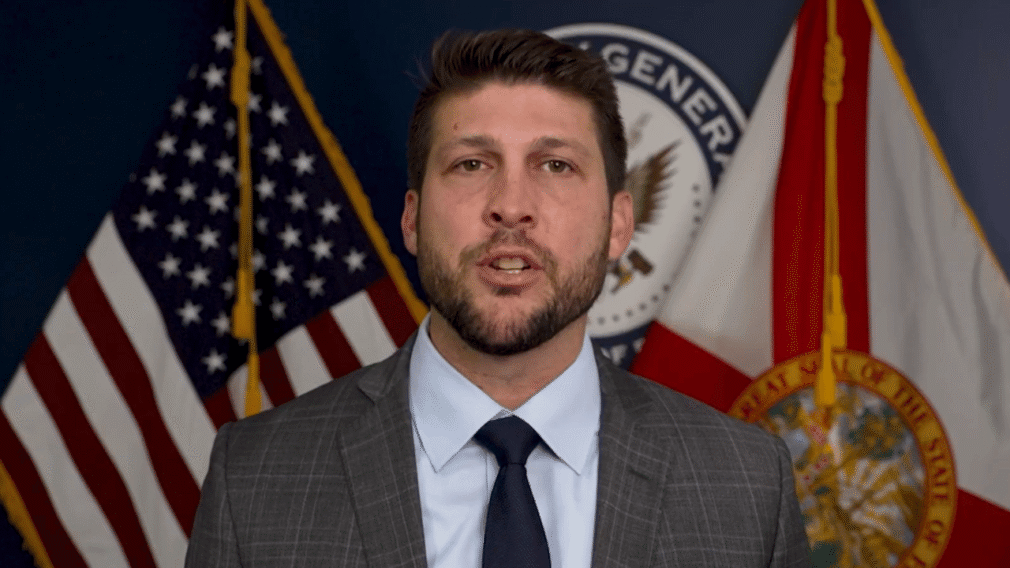
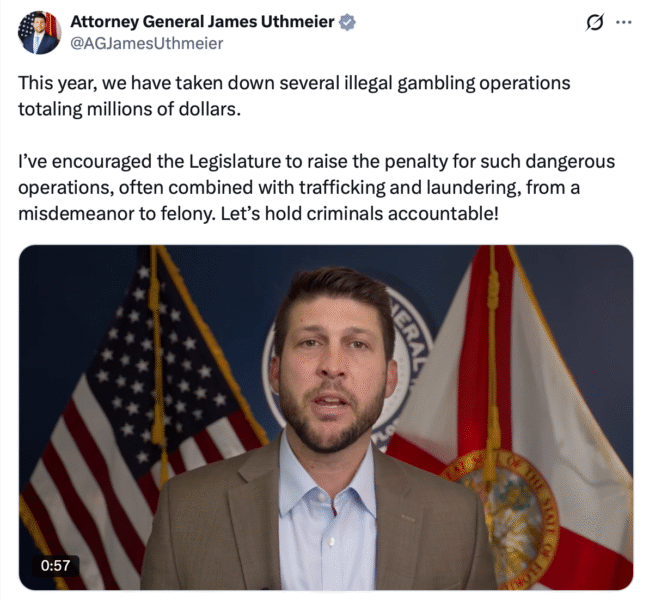
Florida Attorney General James Uthmeier called for a major shift in how the state punishes illegal gambling operators. He urged state lawmakers to upgrade the charge for running unauthorized gaming operations from a simple misdemeanor to a felony. Uthmeier argues that current penalties are too weak to stop criminal organizations that generate massive profits from the black market.
Ending the “Slap on the Wrist”
The Attorney General believes the current legal framework fails to deter crime. He described existing punishments as a “slap on the wrist” for operators who can make millions of dollars through illicit channels.
According to Uthmeier, these fines are merely a cost of doing business for large criminal enterprises. He noted that illegal gambling often funds other serious crimes, including money laundering and extortion.
This push for stricter laws follows a high-profile bust involving organized crime. Authorities recently charged over 30 individuals in connection with a gambling ring linked to mafia families.
The investigation even implicated former NBA athletes.
Specific legislation supports Uthmeier’s request. Representative Dana Trabulsy introduced House Bill 198, while Senator Jennifer Bradley sponsored a similar measure in the Senate.
If the legislature passes these bills, the harsher penalties will take effect on July 1. Uthmeier stated that law enforcement needs these stronger tools to hold wrongdoers accountable and protect the public.
Defending the Hard Rock Monopoly
The crackdown on illegal operators directly benefits the state’s only legal sports betting provider. The Seminole Tribe holds an exclusive monopoly on the market through its Hard Rock Bet platform.
This system relies on a “hub-and-spoke” model established in a 2021 compact with the state. Under this rule, mobile bets are legally considered to take place on tribal land where the servers are located, even if the player stands elsewhere in Florida.
Legal challenges to this monopoly have failed. In late 2025, Judge Christopher John Baum dismissed a lawsuit filed by a group called “Protect the Constitution LLC.”
The group claimed the sports betting model violated a 2018 constitutional amendment requiring voter approval for gambling expansion. The judge ruled that the plaintiffs lacked the legal standing to bring the case, cementing the tribe’s control over the market.
Closing Loopholes and Fighting Offshore Sites
The Seminole Tribe is also using technical definitions to expand its digital floor. Hard Rock Bet recently introduced games “Powered by Past Motor Racing.”
These titles look and play like traditional casino slot machines. However, the software determines wins and losses based on the results of historical car races.
This fits within the specific language of the 2021 compact, allowing the tribe to offer a casino-style product without a full online casino law.
State regulators are simultaneously targeting the “grey market.” The Florida Gaming Control Commission (FGCC) sent cease-and-desist letters to offshore sportsbooks like Bovada, BetUS, and MyBookie.
These sites operate without a license and pay no taxes to the state. The tribe has also warned customers about illegal “arcades” and internet cafes appearing across Florida.
These physical locations often host unregulated gambling machines that offer no consumer protection.
While the state fights these battles, other operators act carefully. Fantasy sports companies like PrizePicks and prediction markets like Kalshi continue to view Florida as a key territory.
They offer alternatives to traditional sports betting, capitalizing on the lack of commercial competition. However, the state’s aggressive posture suggests that any operator falling outside the strict definitions of the law faces increasing legal risk.
Recommended