
Connecticut Orders Prediction Markets to Halt; Kalshi Files Federal Suit
Regulators in Connecticut have ordered three major prediction market platforms to stop operations immediately. The state accuses these companies of running illegal sports betting operations without a license. Kalshi, one of the targeted firms, responded less than 24 hours later by suing the state in federal court.

The State’s Regulatory Strike
The Connecticut Department of Consumer Protection (DCP) issued cease-and-desist orders to Kalshi, Robinhood, and Crypto.com.
The Gaming Division claims these platforms violate state gambling laws. Commissioner Bryan T. Cafferelli stated that none of these entities hold the necessary licenses to operate in Connecticut.
Regulators listed specific safety failures in their complaints. They allege the platforms allow access to users under 21 and market their products to individuals on self-exclusion lists for problem gambling.
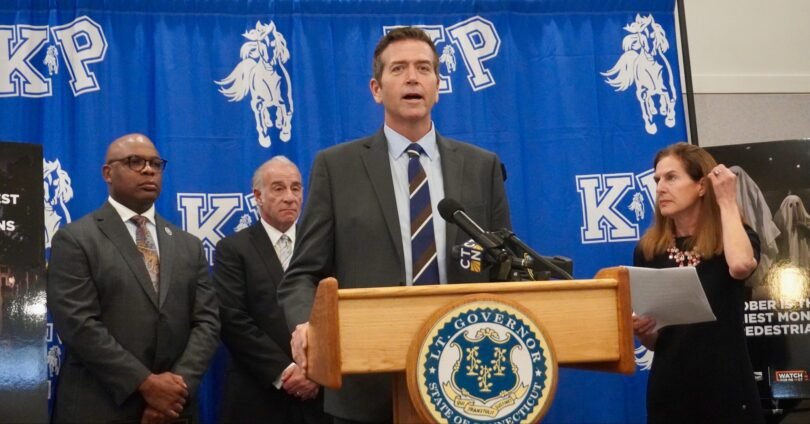 Commissioner Bryan T. Cafferelli
The state also flagged a lack of integrity controls. Officials worry that “insiders” with influence over event outcomes can place bets. The DCP also criticized the companies for marketing high-risk wagers as safe financial investments.
“These platforms are deceptively advertising that their services are legal, but our laws are clear,” said Kris Gilman, DCP Gaming Director.
“They are also operating outside of a regulatory environment, posing a serious risk to consumers who may not realize wagers placed on these illegal platforms offer no protections for their money or information. A prediction market wager is not an investment.”
Kalshi’s Federal Defense
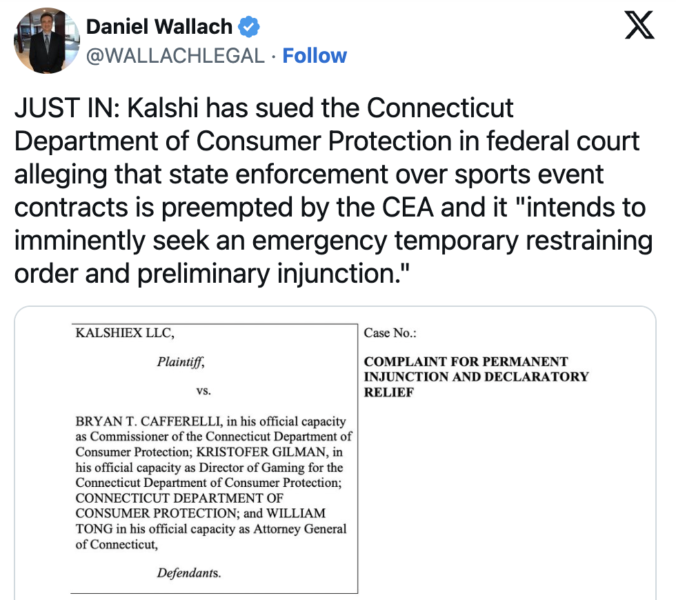
Kalshi rejected the state’s authority and filed a lawsuit in federal district court to block the order. The company argues that it operates under federal rules, not state laws.
Kalshi is registered with the Commodity Futures Trading Commission (CFTC). They claim the federal Commodity Exchange Act overrides state gaming regulations.
Jack Such, a spokesperson for Kalshi, defended the company’s status. “As other courts have recognized, Kalshi is a regulated, nationwide exchange for real-world events, and it is subject to exclusive federal jurisdiction,” Such stated.=
“It’s very different from what state-regulated sportsbooks and casinos offer their customers.”
In its lawsuit, Kalshi argues that Connecticut uses a definition of gambling that is too broad. The company warns that the state’s logic could ban all types of trading contracts, not just those related to sports.
Robinhood also released a statement affirming that its contracts operate through a CFTC-registered entity.
A Widening Legal Map
Connecticut is the tenth state to take action against Kalshi. The company now fights legal battles on multiple fronts across the country. The results so far are mixed.
In New Jersey, a federal judge granted Kalshi a preliminary injunction, allowing them to stay open. However, the state appealed this decision.
A coalition of 34 attorneys general has joined New Jersey to oppose the platform.
In Maryland, the outcome was different. A judge there refused to protect Kalshi. The court ruled that Congress did not intend for federal trading laws to erase state gambling statutes.
The situation in Nevada also shifted against the company. A judge initially protected Kalshi but later dissolved the order. The court decided that Kalshi’s legal definitions were expansive enough to cover all sports betting, which Nevada strictly controls.
Meanwhile, Massachusetts took the offensive by suing Kalshi in state court rather than federal court. This move denies Kalshi the “home field advantage” of the federal legal system.
Tribal nations have also entered the fray. Tribes in California and Wisconsin sued Kalshi, arguing the platform violates the Indian Gaming Regulatory Act.
However, a California judge recently denied a request from the tribes to shut down the market. This grants Kalshi a temporary victory on the tribal front while the state-level wars continue.
Recommended